
SBN 300
IS PART CORROSION A PROBLEM?
SBN 300 is a proprietary version of salt bath nitriding that is designed to take corrosion resistance to the max. When tested per ASTM B117 salt spray test specification, SBN 300 achieves more than 300 hours of resistance.
The Process
WHAT IS SBN 300?
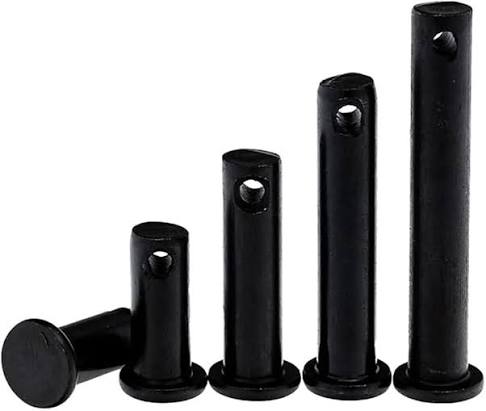
A propietary version of salt bath nitriding designed to maximize corrosion resistance.
Salt bath nitriding already produces a fair amount of corrosion resistance on its own; however, TS Tech Nickel wanted to push that feature to the max and developed the SBN 300 process to be able to stand up to the toughest environments and provide corrosion protection beyond what the original process achieved. Because TS Tech Nickel has its own in-house salt spray testing equipment, verification can be made of process results. If you have a particularly challenging application that is being defeated by corrosion, SBN 300 may be the answer for you.
Materials Treated
What Can We Treat
These material types are compatible with this process.
- Low Carbon Steel
- Alloy Steel
- Stainless Steel
- Tool Steel
- Cast Iron
- Ductile Iron
- Powdered Sintered Steels
- Hardened Steel
- Inconel
- Nitriding Grade Steel
- 3D Printed Steel
Why Choose SBN 300
Advantages & Benefits
INCREASED HARDNESS
Raises surface hardness to 55 HRC+
Corrosion Protection
Salt spray resistance to 300 hours+
Minimal Distortion
Low temperature process means low distortion potential.
Abrasion Resistance
Withstands wear, friction, or surface erosion.
Improved Fatique Strength
Increases what a material can withstand under repeated or cyclic loading.
Low Coefficient of Friction
Compound layer reduces frictional wear.
Increased Lubricity
Especially with application of finishing oil.
STABLE
No peeling or flaking like with other blackening finishes.
Technical Data
Specifications
All of TS Tech Nickel’s Salt Bath Nitriding processes conform to the stringent aerospace standard AMS2753. Key characteristics are listed.
Corrosion Resistance
300+ hours salt spray testing.
Compound Layer Thickness
Up to 30 microns.
Surface Hardness
Carbon/alloy steels: 55+ HRC – Stainless Steels: ~70 HRC.
Process Temp
950F – 1075F
Colors
Black
Tank Capacities
30″ W x 30″ L x 48″ H. Contact us about larger parts.
Compliance
Process: AMS2753
Pyrometry: AMS2750
Growth
Generally 50% of compound layer thickness.
Applications
Common Applications

Marine
Components subjected to marine environments can greatly benefit from the SBN 300 process.

Construction
Heavy machinery constantly faces the elements, and SBN 300 can help.

Automotive Parts
Extra corrosion resistance for exposed parts.

Defense
Parts that don’t corrode will be more reliable for the warfighter.
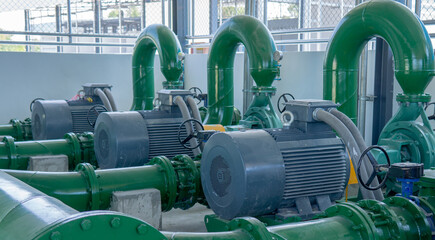
Fluid Transfer
Pumps, valves, flanges, and more can benefit from improved resistance.

Oil & Gas
Refinery components are often exposed to corrosive environments.
FAQs
Frequently Asked
Questions
You’ve got questions? We’ve got answers.
SBN 300 is a special salt bath nitriding process developed by TS Tech Nickel to enhance the corrosion resistance properties of ferrous part surfaces. Parts surface treated with the SBN 300 process are proven to withstand a salt spray test per ASTM B117 specification for 300 hours or more.
To review, salt bath nitriding is a thermochemical treatment whereby a specific chemistry salt is heated to molten temperatures (950-1075°F) and parts are submerged in the molten salt for a set period of time to build what is called a compound layer on the surface of ferrous material parts. Salt chemistry varies among the trademarked processes, however, all contain carbon and nitrogen-carrying elements. The carbon and nitrogen interact with the iron content of the ferrous material to form the layer on the surface. This compound layer is best described as an “eggshell” that fuses with the steel to create a hard (55+ HRC), wear-resistant surface that vastly improves the ferrous material’s wear and abrasion resistance while lowering the coefficient of friction.
There are many applications that can benefit from a surface treatment that greatly enhances the corrosion resistance properties of the ferrous material.
The marine industry can particularly benefit from the SBN 300 surface treatment. Not only does it significantly enhance the corrosion resistance properties of ferrous metals, but it can also help prevent galvanic corrosion of parts. Unlike coatings, which are based on adhesion to the surface of the material, the nitride layer produced by salt bath nitriding is fused into the material, so there are no concerns with adhesion. Because of this diffusion, it will no longer form a separate conductive barrier that is characteristic to galvanic corrosion. Another benefit of diffusion is that mechanical damage is better resisted than surface adhesion coatings.
Other typical applications include, but are not limited to: firearm parts that will be exposed to extreme environments, fluid processing components that might be exposed to a corrosive environment, parts to be used in an outdoor setting, or any other part that can benefit from an extreme improvement in corrosion resistance.
Part of TS Tech Nickel’s laboratory services is the capability to conduct salt spray testing to the ASTM B117 specification. If you’d like us to prove our claim of 300+ hours of salt spray resistance, we are more than happy to treat some sample parts of yours at no charge, and then conduct the testing in our lab. There is a charge for the testing services, so if you’re interested in having us conduct this testing for your parts, please contact us for a quote.
TS Tech Nickel’s salt bath nitriding process tanks are 30” W x 30” L x 48” H. While these are the dimensions of our tanks, it is not necessarily the limit of parts that we can treat. Special fixturing can sometimes allow us to treat parts larger than our tank dimensions. In addition, because TS Tech Nickel is part of the HEF Groupe, our sales personnel have access to other sister sites that have larger processing equipment to provide pricing. If you have larger parts, and would like to know if they can be processed, we encourage you to contact us with your part dimensions and we will be happy to search for a solution for you.
All nitriding processes, including SBN 300, are intended to be a finish process and therefore you should see little to no dimensional change with the process. While the process is technically a form of heat treatment, the processing temperatures are typically between 950-1075°F, which for all forms of steel is below the critical temperature where crystal structures start to change and reform (known as the austenite phase). Staying below the austenite phase means that the shape of the parts will not be affected as the steel has not started to plasticize, as with heat treatments requiring hotter temperatures, such as neutral hardening or carburizing.
Having said that, the compound layer that builds into and on the surface of the parts can cause a minimal amount of growth. Typically the compound layer will be somewhere between 10-20 microns of depth, and a general rule of thumb is that half of that depth will be above the original surface, so you can expect somewhere between 5-10 microns of growth on all surfaces. Very fine thread pitches can sometimes become brittle, but for the vast majority of applications, this is not a problem. If you are concerned about brittle thread pitches, you can mask threaded holes using the corresponding bolt, but a high-temperature anti-seize compound (rated to 1200°F minimum) must be applied to the threads prior to salt bath nitriding, or removal becomes difficult to impossible.