
Hard Chrome Plating
PARTS NEED AN EXTRA HARDENED SURFACE?
TS Tech Nickel’s industrial hard chrome plating is excellent for applications where a surface condition up to 70 HRC is required.
The Process
WHAT IS HARD CHROME PLATING?
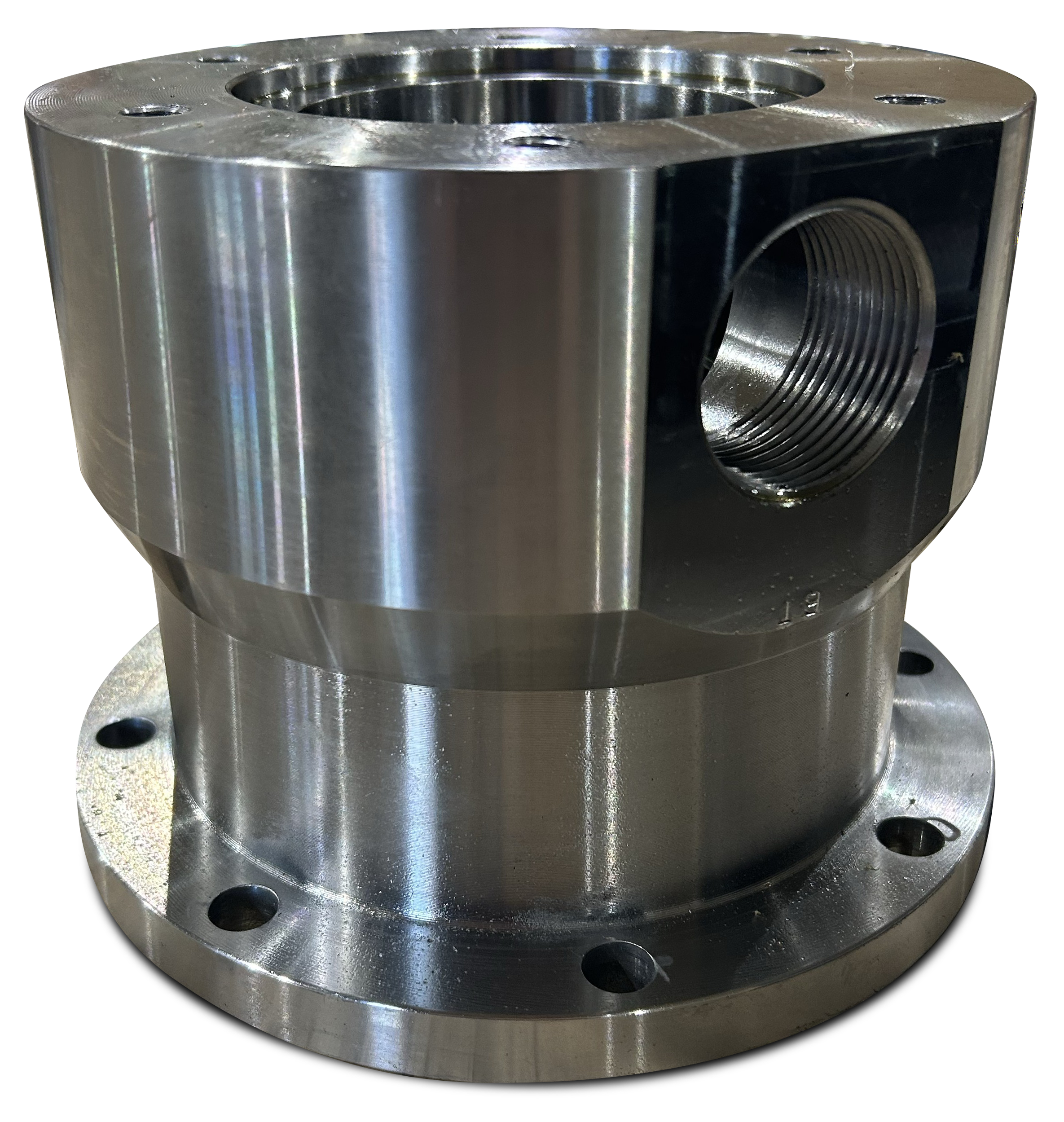
What hard chrome plating is—and what it’s not.
Hard chrome plating is an electrolytic plating process, meaning that an electric current is flowed through the part being plated to get the chromium to bond with the part or substrate. This deposits a thick layer of chromium (thick is typically somewhere between 0.001″ to 0.030″ or more). Because the process requires electrical current, the geometry of the part can affect how the plating adheres to the part, meaning that you can experience buildup of plating around sharp corners and edges that must be ground off after completion.
It’s important to note that TS Tech Nickel’s hard chrome plating process is somewhat of a “line-of-sight” process, meaning it can’t always coat the entirety of a part. Be sure to contact us to find out what we can do for your parts.
What hard chrome plating is not: We all know that automakers love to enhance the appearance of their external components with chrome. This process is known as decorative chrome plating, and is different from hard chrome plating, primarily in the thickness, which is magnitudes thinner than hard chrome. Also, decorative is shiny, and hard chrome is dull. TS Tech Nickel does not provide decorative chrome plating, but is happy to help make a referral if you contact us.
Materials Treated
What Can We Treat
These material types are compatible with this process.
- Carbon Steel
- Alloy Steel
- Tool Steel
- Stainless Steel – 300 Series
- Stainless Steel – 400 Series
Why Choose Hard Chrome Plating
Advantages & Benefits
Increased Hardness
Typically results in a hardness range of 65-70 HRC.
Corrosion Protection
Enhances corrosion resistance – for additional resistance, consider Ni-Chrome.
Adhesion Strength
Hard chrome offers a superior bond strength.
Abrasion Resistance
Will not peel or flake in abrasive applications.
Low-Friction Surface
Improves frictional or sliding wear resistance.
Improved Lubricity
Chrome has good oil retention properties.
Dimensional Restoration
In certain instances, hard chrome can be used to correct undersized parts.
Temperature Resistance
Good heat mitigation properties.
Technical Data
Specifications
TS Tech Nickel’s hard chrome plating process primarily conforms to the AMS2460 industrial specification. Contact us for others.
Thickness Range
Typically .001″ – .030″ but capable of more.
Plating Hardness
Generally 65-70 HRC.
Tank Capacity
6″ diameter x 60″ length.
Corrosion Resistance
Enhances corrosion resistance. For best corrosion resistance, consider nickel/chrome.
Bond strength
Superior adhesion performance.
Compliance
AMS2460
Color
Silver
Applications
Common Applications

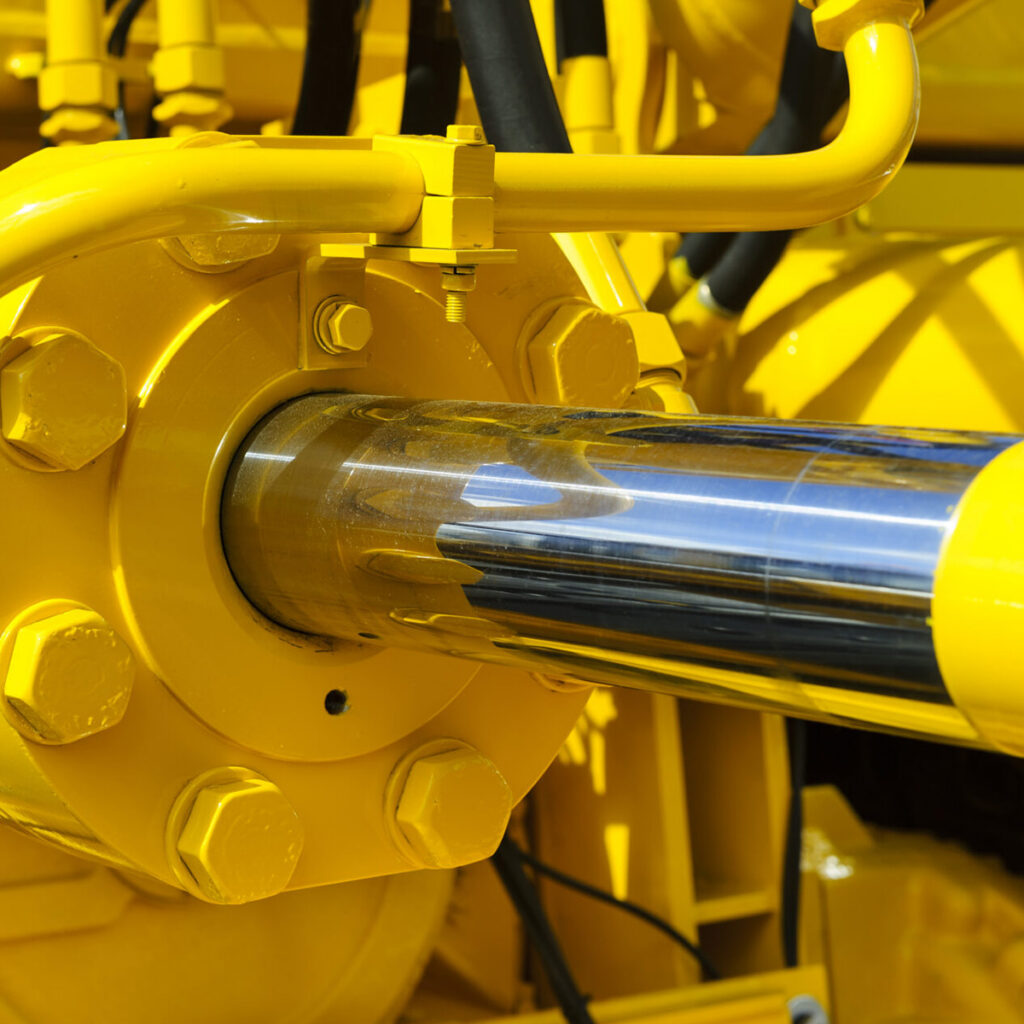
Hydraulic Components
Valves, cylinders, shafts, and more.

Agricultural
Harvester rolls and other high-hardness components.
Steam System Components
Heat resistance and enhanced corrosion prevention.
Tool & Die
High hardness and undersized correction.

Food Processing
Cutting and slicing equipment.

Defense & Aerospace
Identification tags, actuator housings, and others.
FAQs
Frequently Asked
Questions
You’ve got questions? We’ve got answers.
Hard chrome plating is a surface treatment coating process whereby an electrical current is passed through the part to be plated via anodes attached to fixtures, and then submerged in a tank where chromium will attach to the charged part surface and deposit a hard layer of chrome. Because it is intended primarily for industrial use, it is also sometimes referred to as industrial chrome, functional chrome, or engineering chrome. The hardness of this plating layer is generally in the range of 65-70 HRC and thus imparts a hard, wear and abrasion resistant layer on the surface of the part.
Now that we’ve established what it is, let’s take a look at what hard chrome plating is not:
Decorative chrome plating is what automakers have used for years to add a touch of style and class to exterior components of their vehicles. Certain shops specialize in the deposit of decorative chrome. Hard chrome does not produce the shiny, mirror-like finish, but rather a silver, dull or flat finish. TS Tech Nickel does not provide decorative or “show” chrome plating services.
Flash chrome plating is actually a version of hard chrome plating but is deposited in a very thin layer (typically .00005”/.0001”). Flash chrome plating can be beneficial when only a thin layer is required for light wear resistance and without altering the dimensions of the part more dramatically. TS Tech Nickel can perform a flash chrome service depending on part geometry.
Thin dense chrome plating is a specialized chromium plating with a bath chemistry designed to apply a dense layer of chrome in a very thin layer (typically .0001”/.0002”). The benefit to this type of chrome plating is that the corrosion resistance is enhanced without altering the dimensions of the parts more dramatically. TS Tech Nickel does not provide thin dense chrome, but we encourage you to instead consider our Nickel/Chrome process for similar results.
The answer to this question is, it depends. The electrolytic chrome plating process is somewhat of a line-of-sight depositing process. For example, for parts with both an outer and inner diameter, only the outer diameter will be coated as the electrical current will only attract chromium particles to the easiest surface to adhere to. Steel is a poor conductor of electric current, and therefore, care must be taken to understand fixturing and electrical current flow to know whether the plating will cover the entirety of a part.
If the part does not have more difficult geometries for the plating bath to “see” then the answer to this question can be yes. We encourage you to contact us if you have an application requiring plating to correct an undersized part. We will be happy to guide you in whether we can offer a solution.
TS Tech Nickel’s hard chrome plating tank measures 6” diameter x 60” length. Because of the customization that can be required for fixture holding in an electrolytic plating process, we encourage you to contact us with your dimensional part blueprint for us to determine if our hard chrome plating process will be a fit.
Hard chrome plating will grow the dimensions of your parts according to the thickness of plating that you specify. Keep in mind that because the plating is applied to all surfaces, that the thickness you specify will grow the part in two directions, whether your part has diameters or is flat, this must be taken into consideration. For example, a 2” diameter part with a plating thickness specification of .0004”/.0008” will experience overall growth of .0008”/.0016”.
Unfortunately, hexavalent chromium has been identified as a hazardous substance by many governmental entities. Across the globe, it is being slowly phased out in favor of safer, more environmentally friendly alternatives. While TS Tech Nickel complies with all applicable laws and regulations, the regulatory environment around hexavalent chromium keeps changing and will likely be completely phased out someday in the future.
Additionally, some chrome platers only offer certain types of chrome plating. For example, we do not offer bright, decorative chrome that are popular for automotive and motorcycle trim parts, for example. TS Tech Nickel only offers hard chrome, and our process does have some limitations on geometries and part designs that it will plate. We encourage you to contact us if you have a hard chrome application, and we will advise you if our process is capable.